Basically every cell in the human body can be traced back to a fertilized egg that came into existence from the union of egg and sperm. But the body is made up of over 200 different types of cells, not justone. All of these cell types come from a pool of stem cells in the early embryo. During early development, as well as later in life, various types of stem cells give rise to the specialized or differentiated cells that carry out the specific functions of the body,such as skin, blood, muscle,and nerve cells.
Stem cells are undifferentiated, or “blank,” cells. This means they’re capable of developing into cells that serve numerous functions in different parts of the body. Most cells in the body are differentiated cells. These cells can only serve a specific purpose in a particular organ. For example, red blood cells are specifically designed to carry oxygen through the blood.
All humans start out as only one cell. This cell is called a zygote, or a fertilized egg. The zygote divides into two cells, then four cells, and so on. Eventually, the cells begin to differentiate, taking on a certain function in a part of the body. This process is called differentiation.
Stem cells are cells that haven’t differentiated yet. They have the ability to divide and make an indefinite number of copies of themselves. Other cells in the body can only replicate a limited number of times before they begin to break down. When a stem cell divides, it can either remain a stem cell or turn into a differentiated cell, such as a muscle cell or a red blood cell.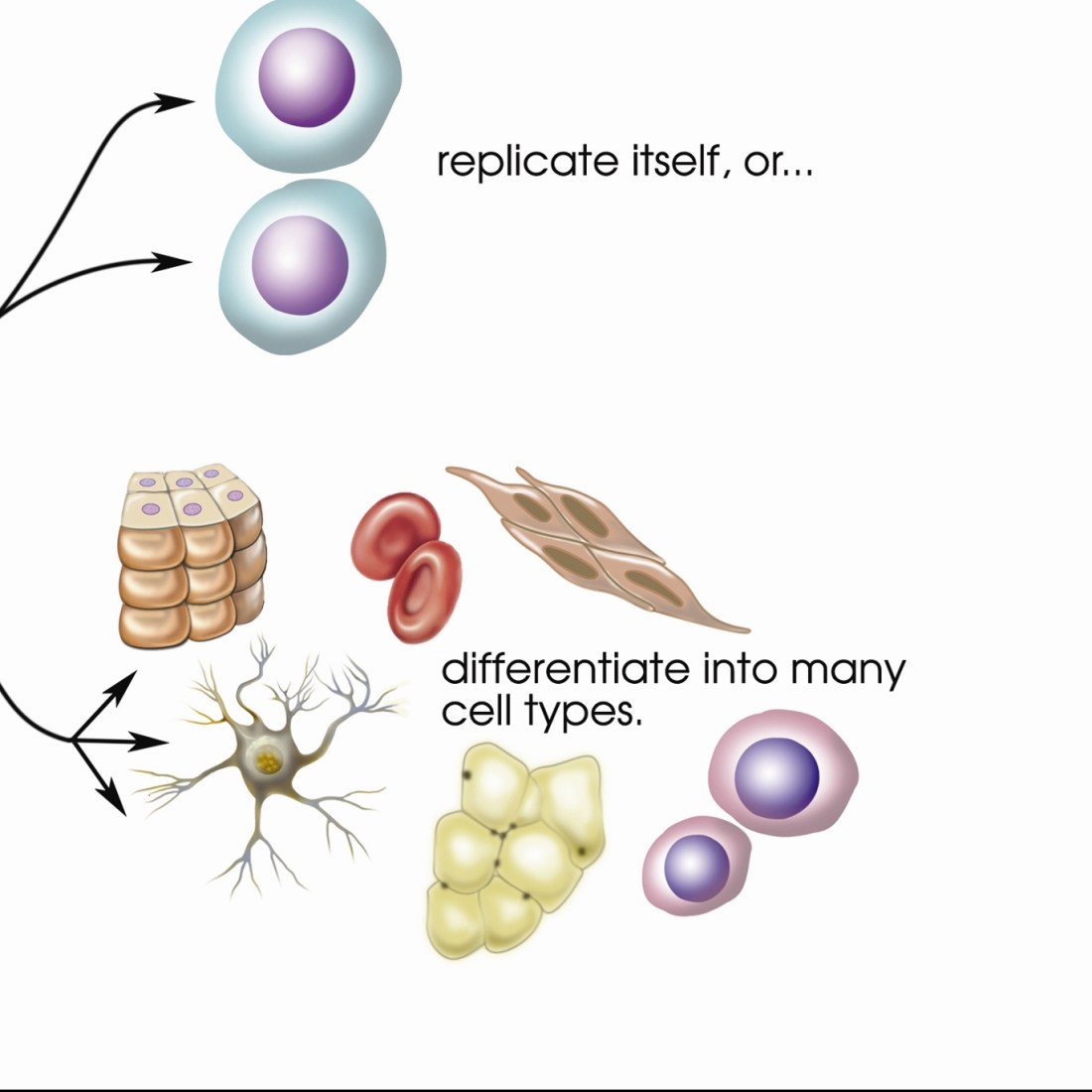


 stemcellsfacts